


Inguinal Hernia Symptoms in Men What to Watch For and When to Get Help
A lump or ache in the groin can be easy to dismiss, especially if it comes and goes. But when that discomfort is caused by an inguinal hernia, waiting too long can make treatment more complicated.
An inguinal hernia happens when tissue, often part of the intestine or fatty tissue from inside the abdomen, pushes through a weak spot in the lower abdominal wall near the groin. It may appear as a bulge on one side of the pubic area and may become more noticeable when standing, coughing, lifting, or straining.
Men are more likely to develop inguinal hernias because of the way the male groin develops before birth. The inguinal canal, the passageway linked to the testicles descending into the scrotum, can leave a natural area of weakness. Ageing, heavy lifting, chronic coughing, constipation, previous abdominal surgery, and family history can add to the risk.
Spotting inguinal hernia symptoms in men early is important. Many hernias are not immediately dangerous, but they usually do not repair themselves. A proper diagnosis can help prevent pain, increasing bulge size, and rare but serious complications.
This article is for general information only and is not a substitute for medical advice. If you have new groin pain, swelling, or a lump, speak with a qualified health professional.
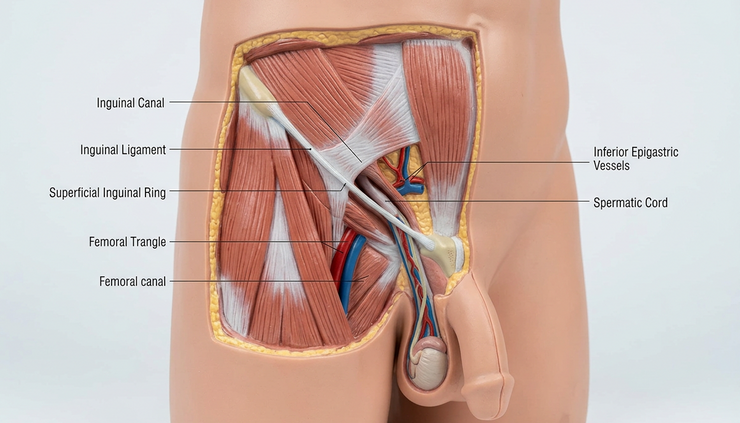
Common inguinal hernia symptoms men should recognise
Inguinal hernias do not always cause severe pain at first. Some men notice a small lump before they feel any discomfort. Others feel aching or pressure for weeks before a bulge appears.
Symptoms can vary depending on the size of the hernia, activity level, and whether the hernia moves back into the abdomen when lying down.
A visible or noticeable bulge in the groin
A bulge is one of the most common signs. It may appear on one or both sides of the groin, just above the crease where the thigh meets the lower abdomen.
The bulge may:
Become more obvious when standing
Enlarge when coughing, laughing, lifting, or straining
Reduce or disappear when lying down
Feel soft or slightly firm to the touch
Extend into the scrotum in some cases
A groin bulge that comes and goes still needs medical assessment. Even if it slips back in easily, it can enlarge over time.
Aching, burning, or pulling in the groin
Some men describe hernia discomfort as a dull ache rather than sharp pain. Others notice a burning or pulling feeling, especially after physical activity.
This sensation may be felt:
In the lower abdomen
Along the groin crease
Around the pubic area
Down into the scrotum or testicle on the affected side
Pain from a hernia can be mild at first, but it may increase after a long day on your feet or after lifting.
Pain when coughing, lifting, or straining
Activities that increase pressure inside the abdomen can make a hernia more noticeable. This pressure may push tissue further through the weak spot.
Symptoms may flare when you:
Lift heavy items
Cough or sneeze
Strain during bowel movements
Exercise intensely
Stand for long periods
If groin pain regularly appears with these actions, it is worth arranging a medical review.
A heavy or dragging feeling
Some men feel pressure rather than pain. The groin may feel heavy, full, or as if something is dragging downward.
This feeling can be more noticeable later in the day. It may improve after resting or lying flat, but repeated pressure often brings it back.
Swelling or discomfort in the scrotum
If the hernia descends into the scrotum, it can cause swelling, tenderness, or a feeling of fullness around the testicle.
Scrotal swelling has several possible causes, including infection, fluid collection, testicular problems, and hernia. Because some causes need urgent care, any new scrotal swelling should be checked.

Symptoms that can look like an inguinal hernia
Not every groin lump or ache is a hernia. Other conditions can cause similar symptoms, including:
Muscle strain from sport or heavy work
Enlarged lymph nodes
Hip joint problems
Testicular conditions
Epididymitis or other infections
Hydrocele or varicocele
Kidney stone pain referred to the groin
This is one reason self-diagnosis can be risky. A doctor can examine the area and decide whether imaging or specialist review is needed.
When to seek urgent medical attention
Most inguinal hernias can be assessed and treated in a planned way. But some become trapped. This is called an incarcerated hernia. If the blood supply to the trapped tissue is cut off, it becomes a strangulated hernia, which is a medical emergency.
Do not wait for an appointment if symptoms suggest the hernia may be stuck or strangulated.
Red flags that need emergency care
Seek urgent medical help if you notice:
Severe, sudden, or worsening groin or abdominal pain
A hernia bulge that becomes firm, tender, or cannot be pushed back in
Nausea or vomiting
Fever or feeling very unwell
Inability to pass gas or have a bowel movement
Red, purple, dark, or discoloured skin over the bulge
Rapid swelling of the groin or scrotum
Abdominal bloating with increasing pain
These symptoms may mean bowel is trapped within the hernia. Emergency surgery may be needed to prevent tissue damage and serious infection.
If a groin bulge becomes painful, discoloured, or stuck, treat it as urgent. Do not try repeated forceful pushing at home.
What to expect during diagnosis
A hernia assessment is usually straightforward. A GP or surgeon will ask about symptoms, lifestyle factors, work demands, past operations, and whether the bulge changes when standing or lying down.
During the physical exam, you may be asked to stand and cough or bear down gently. This helps the doctor feel whether tissue pushes through the abdominal wall.
Tests that may be used
Many inguinal hernias are diagnosed by examination alone. Imaging may be recommended if the diagnosis is unclear, symptoms are present without an obvious lump, or another condition needs to be ruled out.
Possible tests include:
Ultrasound Often used to assess groin lumps and scrotal swelling.
CT scan May be used for complex cases or when abdominal symptoms are present.
MRI Sometimes used when pain is ongoing and the cause is not clear.
A clear diagnosis helps guide safe treatment and avoids unnecessary delay.

Treatment options for inguinal hernia
An inguinal hernia will not usually heal on its own. Treatment depends on symptoms, hernia size, overall health, and risk of complications.
Watchful waiting may be suitable for some small hernias
If the hernia is small and causes little or no discomfort, a doctor may discuss watchful waiting. This means monitoring symptoms and reviewing the hernia regularly.
Watchful waiting does not mean ignoring the problem. It means making a planned decision with medical guidance.
During monitoring, medical review is needed if:
The bulge grows
Pain becomes more frequent
Activity becomes limited
The hernia becomes difficult to reduce
Red-flag symptoms appear
Surgery is the main repair option
Surgery repairs the weak spot in the abdominal wall. This is the only definitive treatment for an inguinal hernia.
Common approaches include:
Open hernia repair The surgeon makes an incision in the groin and repairs the weakened area, often using mesh for support.
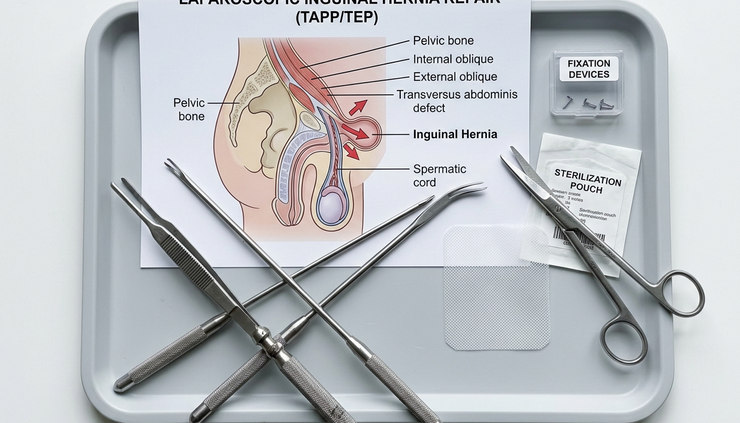
Laparoscopic repair The surgeon uses small incisions and a camera to repair the hernia from inside the abdomen.
Robotic-assisted repair In some centres, robotic systems may assist minimally invasive repair.
Minimally invasive techniques may offer smaller incisions and a faster return to some activities for suitable patients. Open repair is still a strong option and may be preferred in certain cases. The best approach depends on the hernia, body type, previous surgery, anaesthetic risk, and surgeon experience.
Recovery is planned around safe movement
After repair, most people are encouraged to walk early, while avoiding heavy lifting until cleared by the surgical team. Recovery advice varies based on the repair type and individual health.
Following the post-operative instructions matters. It helps reduce strain on the repair while the tissue heals.
How to reduce strain while waiting for review
If you suspect a hernia, arrange medical assessment rather than relying on self-care. Still, a few practical steps may reduce discomfort while waiting for your appointment.
You can:
Avoid heavy lifting where possible
Use proper lifting technique if lifting cannot be avoided
Treat constipation with fluids, fibre, and medical advice if needed
Seek help for a chronic cough
Stop or reduce activities that trigger sharp pain
Maintain a healthy weight if advised by your doctor
Avoid wearing a truss or support belt without medical guidance. It may provide temporary comfort for some people, but it does not repair the hernia and may not be suitable for every case.
Do not ignore groin pain or swelling
A groin lump, aching pressure, or pain with coughing and lifting can feel awkward to talk about. But hernias are common, and surgeons assess them regularly. Early review can give peace of mind, confirm the diagnosis, and help plan treatment before symptoms worsen.
If you have a new groin bulge, ongoing discomfort, scrotal swelling, or pain that affects work, exercise, or daily movement, schedule a consultation with an experienced general surgeon. Prompt assessment is especially important if the bulge is growing, painful, or no longer goes back in when lying down.
Getting checked is not overreacting. It is the safest way to protect your health and choose the right next step.


Comments